How to Explain Law of Attraction to Kids and Shape Their Beliefs Early
What could be a greater gift from a parent to a child than teaching them that they are not helpless observers of life, but conscious participants in shaping it?
If you’re wondering how to explain the law of attraction to kids in a way that feels practical rather than abstract, the key lies in simplicity and emotional clarity.
Teaching the Law of Attraction to kids can be a powerful decision when approached with balance and understanding. Many of the practices adults struggle with—such as creative visualization, positive focus, and belief shaping—come naturally to children. Their minds absorb ideas quickly, especially when those ideas are introduced by someone they trust.
Children learn best through play, imagination, and emotional engagement. This is precisely why principles related to the Law of Attraction can feel more natural to them than to adults. They are less burdened by doubt, overthinking, and resistance. In many ways, they already live in a state of openness.
Early childhood plays a significant role in shaping a person’s future. Research in developmental psychology consistently shows that early belief formation influences long-term behavior and self-perception (see research summaries on child development from the American Psychological Association).
The beliefs, assumptions, and emotional patterns formed during these formative years often influence adult behavior and self-image. When parents consciously guide children toward empowering beliefs, they are not imposing fantasy — they are helping shape a resilient and optimistic inner framework that can support them for life.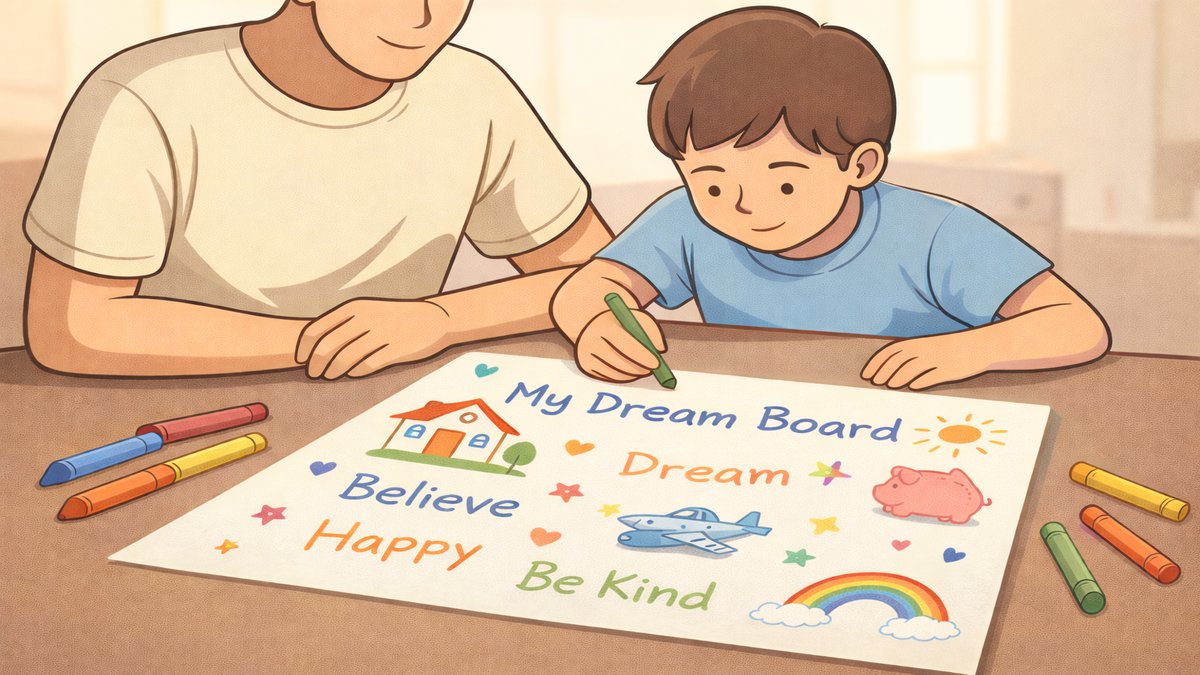
Power of Intention
Rather than telling kids to chase their desires, we should first help them understand the power of intention and how it quietly influences outcomes.
There is a huge difference between running behind things and moving forward with inner clarity. The first comes from a feeling of lack — as if something is missing and must be forcefully obtained. The second reflects calm intention combined with trust in the natural order of life.
Intention is not about demanding results; it is about deciding who you want to be and how you want to feel. When a child sets an intention — for example, “I want to do my best,” or “I want to be kind,” — the mind begins aligning thoughts and behaviors with that decision. Psychologically, this strengthens focus and self-concept. Spiritually, it reflects harmony with the larger flow of life.
Introducing small daily habits — such as simple Law of Attraction gratitude exercises — can gently reinforce this sense of intention and emotional awareness in children.
When a person learns to move with this sense of inner direction instead of desperation, desires tend to unfold more naturally. This mindset is actually easier for children to develop because they are less conditioned by fear and doubt. With gentle guidance, they can learn that intention is more powerful than pressure.
Creative Visualization
The purpose of creative visualization is not merely to imagine a distant future where a wish comes true. Its real value lies in generating the feeling of already moving toward what you desire. When a child learns to imagine success, kindness, confidence, or joy, they begin to internalize those qualities in the present moment.
Bringing the feeling of “already being capable” or “already improving” creates emotional satisfaction now, rather than postponing happiness to some future event. Psychologically, this strengthens self-belief. Spiritually, it aligns inner emotion with outer intention.
Many adults struggle with visualization because their imagination is often clouded by doubt and past disappointments. Children, however, naturally use their imagination without overanalyzing outcomes. They can fully immerse themselves in a mental picture without questioning whether it is realistic or not.
Parents can encourage this by asking simple questions such as, “How would you feel if you did your best in tomorrow’s test?” or “Imagine yourself confidently speaking in front of the class — what does that look like?” These gentle prompts guide children to connect emotion with intention, without pressure.
You can also integrate simple practices from these Law of Attraction techniques for everyday life to make visualization feel natural and consistent rather than occasional.
Visualization, when practiced in a balanced way, becomes a powerful tool for building confidence, emotional strength, and a healthy self-image. It is not about forcing reality to change instantly, but about shaping the mindset through which reality is experienced.
The Detachment Factor
For adults, detachment is often the most challenging part of the deliberate creation process. We become overly concerned about results, timelines, and proof. That constant mental pressure creates tension.
Children, however, naturally demonstrate a different approach. They can desire something deeply and then return to play without obsessing over when it will happen. They enjoy the process more than the outcome.
This is why understanding detachment is so important when teaching the Law of Attraction to kids. Detachment does not mean indifference. It means trusting the process while continuing to act, learn, and grow.
When children set an intention, visualize success, and then return to their daily activities with enthusiasm, they are practicing healthy detachment. Psychologically, this prevents anxiety and performance pressure. Spiritually, it reflects faith in the unfolding of life.
As small results begin to appear — improved confidence, better focus, positive feedback from teachers or friends — their belief system gradually strengthens. With each experience, they build self-trust. Their goals feel more achievable because they no longer approach them from fear or desperation.
Teaching children these principles is not about convincing them that life will instantly deliver everything they imagine. It is about helping them develop empowering beliefs, emotional resilience, and a constructive relationship with their own thoughts.
When intention, visualization, gratitude, and healthy detachment work together, children learn one powerful lesson: they are not powerless. Their thoughts, focus, and attitude matter — and that awareness alone can shape a stronger future.
How to Explain Law of Attraction to Kids at Different Ages
Ages 4–7
Before this age, children naturally develop imagination through stories, creative games, toys, and playful expression. That natural imagination is the foundation. Simple practices like gratitude, happy thoughts, and empowering stories are more than enough in the early years.
Between 4 and 7, their ability to understand begins to grow. This is the phase where imagination should not be restricted but gently directed. Children already imagine themselves as pilots, presidents, animals, movie characters — sometimes serious, sometimes funny.
That playful imagination is powerful and should be encouraged. Without forcing your personal ideas about the Law of Attraction, guide them toward noticing how good thoughts make them feel.
When they ask for something and you plan to provide it, encourage them to imagine already having it and enjoying it. This builds emotional alignment without pressure.
At this stage, the most important lesson is helping them understand the importance of their feelings. Everything should remain playful. Children are naturally detached and present; they simply need space to use their imagination freely while learning to let go.
Ages 8–12 This is the stage where expectations grow stronger. Attachments form more easily, and disappointment becomes more noticeable. Here, awareness of thoughts becomes important. Children can now begin learning about affirmations, attitude, and mindset building in a simple way.
They should also understand that not everything needs to be taken too seriously. Balance is key. At the same time, gratitude practices and visualization should continue. Parents must also work on themselves during this phase, because children learn more from observation than instruction. Being a calm guide and helping them interpret situations from a healthier perspective is more effective than lecturing.
Teenage Years
This phase requires patience. Teenagers begin forming independent opinions and may resist direct instruction. Forcing positive thinking or structured exercises can create rejection. Instead, be suggestive rather than assertive. Introduce meditation, self-awareness, and personal growth material naturally, without pressure.
Encourage reading empowering books and exploring mindset techniques — but allow them to choose. Most importantly, this becomes the action phase. Practical decision-making, responsibility, and real-world effort should be emphasized. The Law of Attraction at this stage must be balanced with accountability. Thoughts influence direction, but action shapes outcomes.
Final Thoughts
The Law of Attraction, when taught responsibly, is less about magical thinking and more about conscious belief formation. Children are already imaginative, receptive, and emotionally open. With gentle guidance, these natural qualities can be directed toward confidence, responsibility, and optimism.
When kids learn to set intentions, feel gratitude, visualize positively, and detach from pressure, they are not just learning a concept — they are developing emotional strength and self-awareness that can support them throughout life.
If this perspective resonated with you, I would genuinely love to hear your thoughts. Feel free to leave a comment below or reach out through the contact page.
And if you believe this message could help another parent, consider sharing it within your circle. Sometimes one simple shift in mindset can influence an entire childhood.
If you found this perspective helpful, feel free to share your thoughts in the comments below. I genuinely appreciate hearing different viewpoints on parenting, mindset, and personal growth.
You can also reach out through the contact page if you have questions or would like to discuss this topic further.
And if this post resonated with you, consider sharing it within your online circles. A simple share can sometimes make a meaningful difference for another parent.

