The Hypnagogic State: How I Use It for Lucid Dreaming
Are you into lucid dreaming and recently came across the term hypnagogia? Wondering what this strange new thing actually is? Well, for me it was a bit different. I didn’t know what hypnagogia was, but I had experienced it long before I ever learned there was a name for it.
So whether you are a lucid dreamer or you are learning about this from somewhere else, let me tell you this: the hypnagogic state is something we all experience on a regular basis. The real deal is whether we recognize it or not, that’s all.
The way we remember or recognize it differs because hypnagogia can bring various kinds of experiences to different people, especially if they maintain some level of awareness while it is happening.
In my case, I often heard music very clearly while falling asleep. Sometimes it sounded like a song I knew, other times like a tune being played at a concert. It would be so crystal clear that I would occasionally wake up immediately afterwards, convinced that someone had actually been playing music around me.
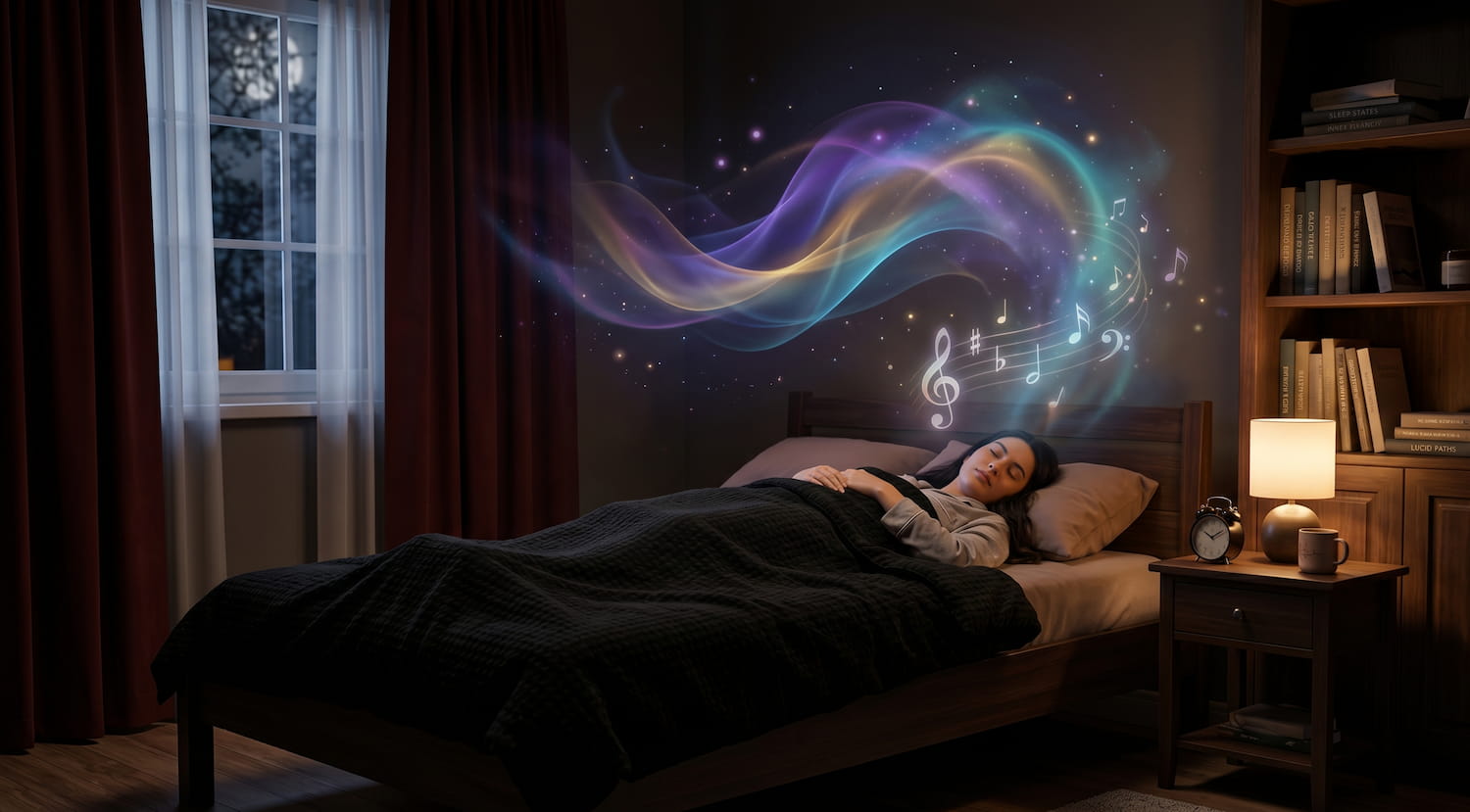
Only years later, when I got into lucid dreaming, I came to know that what I had been experiencing was the hypnagogic state, a natural transitional state that occurs as we fall asleep. That was when all those strange experiences finally started making sense.
Now there is another term that often comes up alongside hypnagogia, and that is hypnopompia. The basic difference is quite simple. Hypnagogia happens as you are falling asleep, whereas hypnopompia happens as you are waking up. We will discuss both of these states later in this post, but from a lucid dreamer’s perspective, hypnagogia is usually the more important one.
How it relates to lucid dreaming is the real question here, and I’ll answer that in much greater detail throughout this article. For now, all you need to know is that many lucid dreaming techniques are built around the hypnagogic state because, if you can maintain awareness while falling asleep, it can sometimes become a gateway into a lucid dream.
That is why so many lucid dreamers try to recognize, observe, and eventually use this state deliberately.
However, the terms hypnagogia and hypnopompia can be confusing at first, so let’s clear that up before moving any further.
Hypnagogia vs Hypnopompia
Hypnagogia and hypnopompia are technical terms that might confuse you if you don’t have a basic idea of them. Don’t worry, that’s what I am here for. I will explain them in relatable terms and won’t make them sound like something straight out of a psychology book that a layperson cannot understand, because I know I have been there myself while learning about lucid dreaming and the various things that can be done during the alpha state of mind.
The alpha state is simply a deeply relaxed state that lies between full wakefulness and sleep. If you’d like to understand it in more detail, I have written an entire article explaining the alpha state of mind.
Understanding this phase is important because it opens up various possibilities, including communication with the subconscious mind and lucid dreaming.
Basically, as you fall asleep, you gradually transition from full wakefulness into sleep. During this transition, the hypnagogic state occurs. Conversely, when you wake up, you move from sleep back toward wakefulness, and this is where hypnopompia occurs. The difference between these two states is not very large, but it matters from the perspective of a lucid dreamer.
Let’s now look at what actually happens during these two states and why hypnagogia has become so important for people interested in lucid dreaming.
Hypnagogia
Hypnagogia is something that people report experiencing while falling asleep. These experiences can range from visual imagery and sounds to sensations that feel surprisingly real.
One example is the experience I mentioned earlier, which falls into the auditory category. But people also report seeing vivid images and feeling things that are not actually happening. You could say it is a kind of partial dreaming that occurs as you are drifting off to sleep.
Have you ever suddenly felt as though you were falling from the stairs or tripping just as you were about to fall asleep? That is probably the most common hypnagogic experience people report. I mention it because almost everyone can relate to it.
Another common example is hearing someone call your name, only to realize nobody actually did. Experiences like these all fall under the hypnagogic state.
Some people also report seeing colorful geometric patterns, crystal-clear imagery, or other vivid visual experiences before falling asleep. Others describe sensations such as floating above their body or having out-of-body-like experiences.
While not everyone experiences these, they are also commonly reported during the hypnagogic state.

Hypnopompia
Hypnopompia is very similar to hypnagogia, except that it happens while you are waking up rather than falling asleep. Have you ever been convinced that someone rang the doorbell while you were asleep, only to wake up and realize it never happened? Or perhaps you woke up unable to move your body even though you were fully aware of your surroundings.
That phenomenon is known as sleep paralysis, something many lucid dreamers become familiar with over time. During this state, people also report experiences such as seeing a frightening figure in the room or sensing someone standing beside them while they are unable to move or speak.
Sleep paralysis is quite common among people who practice lucid dreaming techniques, especially the Wake Back To Bed (WBTB) method. Interestingly, once you become familiar with the experience, it often becomes much less frightening.
In fact, many lucid dreamers intentionally learn how to turn sleep paralysis into a lucid dream rather than trying to wake themselves up immediately.
Although hypnagogia and hypnopompia are closely related, it is usually hypnagogia that receives more attention within the lucid dreaming community because it offers a natural bridge between wakefulness and dreaming.
Now that the confusing terminology is out of the way, let’s talk about the reason you are probably reading this article in the first place: why hypnagogia is so popular among lucid dreamers.
Why Is Hypnagogia So Popular Among Lucid Dreamers?
Hypnagogia is a fascinating state that many lucid dreamers begin to pursue once they realize the possibilities it offers. Personally, as a lucid dreamer, I have come to understand why so many people are interested in reaching this state over and over again.
Reaching hypnagogia itself is not usually the difficult part. If you remain reasonably aware while falling asleep, you will naturally pass through it. The real challenge is maintaining that awareness.
The moment you realise you are in the hypnagogic state, one of two things usually happens: you either become too aware and wake yourself up, or you drift completely into sleep. Finding the balance between those two extremes is what makes hypnagogia so interesting and so challenging.
So why are lucid dreamers so fascinated by it? Simply because it offers one of the few opportunities to consciously observe the transition from wakefulness into dreaming.
Many lucid dreaming techniques, such as MILD, visualization, and affirmations, are often practiced as you drift into sleep because the hypnagogic state provides a unique window where awareness can carry over into dreaming.
If you can maintain awareness during this transition, there is a chance that the dream will begin while your consciousness remains active, leading directly into a lucid dream.
That is why hypnagogia is discussed so often in lucid dreaming books, forums, and communities. It represents one of the closest things we have to a doorway between the waking world and the dream world.
My Experience: What Actually Works
If I had to tell you what actually works from the perspective of hypnagogia, I would say it is learning to find the balance between losing your awareness while falling asleep and becoming completely awake. Finding that balance takes practice.
It also requires you to discover the time when your mind is alert enough to remain aware, yet relaxed enough to drift into sleep. You have to find that sweet spot where your body is falling asleep, but your mind is still consciously observing the process.
This requires experimentation because that sweet spot is different for everyone. Some people find it at their usual bedtime. Others experience it more often during the early morning hours, especially while using methods like the Wake Back To Bed I mentioned earlier. That is probably the most common time when people report hypnagogic experiences.
For me, however, it turned out to be afternoon naps. There is something about them that my subconscious seems to like.

I honestly don’t know how to explain it. I have also noticed that certain places make a difference. For example, I am far more likely to experience a hypnagogic state in my native home than where I currently live. Even while travelling, especially during short train naps, I have noticed that hypnagogic experiences become much more likely.
That is why I always tell people to find their own trigger instead of copying someone else’s routine.
Up to this point, I have mostly talked about the external conditions that make hypnagogia more likely. However, there is another factor that I believe is even more important: your level of awareness.
In my experience, meditation is one of the best ways to develop that awareness. As you meditate regularly, you naturally become more conscious of your thoughts, your emotions, and the subtle changes happening inside your mind. That heightened awareness becomes incredibly useful when you are trying to remain conscious while your body is drifting into sleep.
I have also found that relaxation-based meditation can make entering the hypnagogic state easier. One practice that worked for me a few times combined Yoga Nidra with lucid dreaming methods, allowing me to relax my body while keeping my mind gently aware.
I explain this approach in much more detail in my article on lucid dreaming meditation, where I share the exact meditation method that has personally helped me while practicing lucid dreaming. If meditation interests you, I would recommend giving it a try.
Hypnagogic Methods Not Working? Here’s My Advice
See, I have seen many people struggle with this hypnagogia thing. They hear the term for the first time, start trying to reach that state, spend hours trying to understand it, and quickly become frustrated when nothing seems to happen. Over the years, I have received quite a few emails from people facing exactly this problem.
The truth is, you don’t actually need hypnagogia or hypnagogic methods to become a lucid dreamer. So don’t become dependent on them.
More importantly, don’t mess up your sleep schedule, disturb your sleep cycle, or become obsessed with reaching one particular state.
The whole reason people become interested in hypnagogia is that they want to experience lucid dreams. Somewhere along the way, many beginners lose sight of that original goal.
Reality checks, dream journaling, meditation, and the Wake Back To Bed (WBTB) method are all tried-and-tested practices that can help you become lucid. Hypnagogia is simply one possible doorway. It is not the only one.
Sometimes you become lucid because a reality check suddenly reminds you that you are dreaming. Sometimes you realize it during sleep paralysis and turn that experience into a lucid dream. Sometimes an affirmation carries over into your dream and triggers lucidity. There are many different paths, and you may discover one that works particularly well for you.
So don’t spend all your energy chasing a single technique just because it works for someone else. It might be hypnagogia for you, or it might be something completely different. Stay curious, keep experimenting, but don’t become dependent on any one method.
Above all, protect your peace of mind. Lucid dreaming is a fascinating skill, but it should never come at the cost of healthy sleep or unnecessary stress. In my experience, the people who make the most progress are usually the ones who stay patient, keep practicing, and allow the results to come naturally.
I hope this article has helped you understand the hypnagogic state a little better and given you a clearer idea of how it fits into lucid dreaming. As a fellow lucid dreamer, I genuinely enjoy sharing what I have learned over the years.
If you have any questions or experiences of your own, I’d love to hear them. Feel free to leave a comment below or get in touch through the Contact page.
Your feedback not only helps me improve future articles, but it also helps other readers who are on the same journey. And if you found this post helpful, consider sharing it with someone who might enjoy learning about the fascinating world of lucid dreaming as well.

