Personal Development of Kids -Teach Them How to Be a Winner
I believe that personal development of kids is more important than anything else in the  world because that is all about beginning a new world where people don’t have to give up their dreams and passion because of the limiting beliefs imposed upon the raw minds by the society.
Many people believe that sending kids to school is what is necessary for helping them to develop the skills that will make them successful in life, but education has nothing to do with success.
Education is necessary for making them literate, that is it. I have discussed this in the post named the habits of successful people, winners and losers are created by the type of beliefs that were planted in their minds when they were little kids.
Paradigms – How It Make Us Who We Are
Dream Journal for Lucid Dreaming: Benefits and 8 Simple Tips
If you are thinking of starting a dream journal for lucid dreaming, the tips I am going to share in this post will help you do it properly so that you can improve your dream recall and eventually become a lucid dreamer.
Do you know that a person who is least interested in dreams forgets most of them within minutes of waking up? It is true that most people don’t remember their dreams for long unless the dream was intense.
Some people say they don’t dream at all. That is not true. Everyone dreams, it is just that they don’t remember it, which makes them feel like they never dreamed.
However, if you want to become a lucid dreamer, remembering your dreams is the first and most important step.
That’s why here I will be sharing a few practical tips that will help you get more out of dream journaling, both in remembering your dreams and increasing your awareness within them.
People often become too lazy to write their dreams on paper. While there are alternatives to dream journaling, none of them are as effective because the mind tends to retain information better when it is written down.
These tips will help you move forward in your lucid dreaming journey, as they act as a way of communicating your interest in dreams to your subconscious mind.

Lucid Dreaming Reality Check Techniques That Actually Work
Most people struggle with lucid dreaming not because they lack techniques, but because they don’t focus enough on what actually matters.
Reality checks are one of the most important parts of lucid dreaming, yet they are often misunderstood or practiced incorrectly.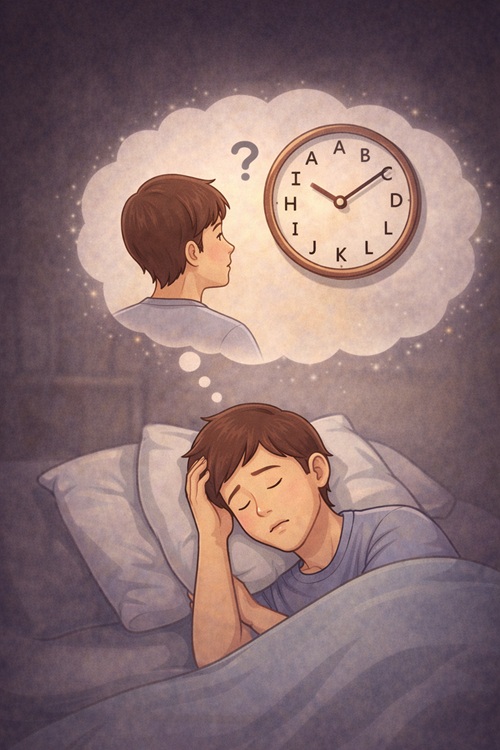
It’s true that lucid dreaming allows you to do almost anything in your dreams, almost like a kind of virtual reality. But at its core, lucid dreaming is simply about becoming aware that you are dreaming.
Many people see this as just the first step, but in my experience, it is everything.
Dream awareness is the very act of understanding the difference between dream and real life. You build this by becoming more aware of your thoughts during the day and by regularly questioning your reality.
What you do in your waking life is what carries into your dream life. When you make a habit of asking yourself “Am I dreaming?” and apply the techniques you will learn in this post, you naturally begin to do the same inside your dreams.
Reality check techniques are not a one-time action. They are a practice that requires genuine curiosity in your waking life for them to work effectively in your dreams.
Through my interest in both spirituality and lucid dreaming, I’ve come to understand something deeper about the connection between our waking life and dream world. In this post, I’ll explain how reality checks work and how you can use them effectively to become more conscious in your dreams.
Turn Sleep Paralysis and False Awakenings into a Lucid Dream
It is very disturbing to find out that you are still dreaming after you think you have woken up (experience false awakening in proper terms). Has it ever happened to you that you wake up from a dream only to find that it is another dream? Well, it is a real thing that has happened to many people, and it often happens to those who are interested in their dream worlds, especially people who are pursuing lucid dreams.
If you experience a dream within a dream, or wake up from a dream only to find that you are still dreaming, you may feel as if one dream is continuing into another. Some people describe it as dreaming inside a dream, but in truth it is known as a false awakening. In a false awakening, one dream changes into another while creating the impression that you have actually woken up.
On the other hand, sleep paralysis can be a disturbing experience for people who have never encountered it before. In this state, you become aware of your surroundings but find yourself unable to move your body. Some people also report seeing or sensing frightening things around them during the experience.
Many times while discussing lucid dreaming with friends and other people interested in dreams, I have realized that both sleep paralysis and false awakenings are surprisingly common experiences. However, there is nothing unusual or supernatural about them. If you are interested in conscious dreaming like I am, these experiences can actually become an advantage because both sleep paralysis and false awakenings can act as gateways into a lucid dream.
The good news is that with a little practice, you can learn to turn these seemingly troublesome experiences into opportunities for lucid dreaming, and that is exactly what I am going to talk about in this post. Continue reading
The Morry Method (Quantum Confidence) — Discontinued, Archived Review
Update (2026): Program Discontinued
Important update : This page refers specifically to the original “Quantum Confidence” package associated with The Morry Method. That original program and its official website are no longer available in the form described here, even though some Morry-based or Morry-inspired products still circulate elsewhere.
I’m keeping this page live as an archived, historical review for people searching “Morry Method” or “Morry Zelcovitch,” and for readers who already know the program and want context about what it was and how it worked.
If you’re here looking for something you can actually use today – at the bottom of this page you’ll find a section called ‘What to Use Instead Today (2026)’, with practical, current alternatives that aim for the same goals (confidence, mindset, and emotional stability) without relying on a defunct product.
The Morry Method which is created by Morry Zelcovitch has gained a lot of popularity recently because many people have found it more effective than other brainwave entrainment based techniques.
Morry Zelcovitch is a certified brainwave audio engineer who has been in this field for more than two decades and he is constantly working to bring research-based updated brainwave audio tracks, so I think he is more reliable than many others in this area.
The reason behind people’s failure is often due to their lack of self-confidence. Confidence as it seems is not an external thing, it is what happens inside that gets reflected outside, and people with a weak self-image can’t gain confidence no matter how experienced they become.
By understanding this factor Morry created this brainwave-based product that was intended to fill you up with the self-confidence that you need to achieve whatever goals you set in life.
The original Quantum Confidence program was designed to work on the root cause of your self-image problem so that you get a winner-like feeling whenever you make a decision, and this attitude was meant to stay with you over time.
Continue reading
The Lucid Dreaming Meditation Method That Really Works
Ever wondered how meditation can help with becoming conscious in your dreams, and if there is any particular lucid dreaming meditation method that you can use for this purpose?
Well, one thing a person needs to understand is that maintaining awareness while falling asleep is all that you need in order to explore your inner world through conscious dreaming. It opens up multiple doors for you. Lucid dreaming is much more than simply controlling your dreams. It also allows you to dive deeper into your inner mind, where you can sometimes find solutions to various real-life problems.
Most of the popular methods in books talk about techniques involving visualizations and consciously falling asleep.
Even the most popular and commonly used WILD technique is based on maintaining awareness while the body falls asleep.
It can be really confusing to know what to try and what to avoid when you have too many techniques in front of you. That is why in this post I will be providing you a meditation method that is tailored specifically to induce lucid dreams by combining meditation, visualization, and the mechanism behind the famous WILD technique.
I will talk about the WILD technique in more detail and guide you exactly on how to perform this meditation, but first let me give you a short idea about how meditation helps with lucid dreaming in general. Continue reading
20 Positive Traits of Emotionally Healthy People
So, what do you think defines emotional well-being? Can you spot it in someone’s behavior or evaluate yourself for signs of emotional health traits that might affect your overall life satisfaction? Seeing something wrong in others is easy, especially in this world where, during this age of AI and information availability, there does not need to be a psychologist to make a list of what is wrong with others, nor does one have to be a spiritually wise person to spot characteristics of emotional problems in others. So, it will be very easy to read this post by keeping people in mind to analyze their behavior and judge.
But instead of that, this post is intended for self-analysis so that a person could take necessary actions by knowing their own state of emotional well-being in order to strive to be more joyful and full of life by understanding the characteristics of emotionally healthy people and the qualities of a healthy person.
You may already have some notions about the indicators of a person’s mental state. Nevertheless, it’s crucial to remember that our understanding of our own inner state and our perception of others’ emotional well-being can fluctuate based on our current emotions. When we’re feeling happy, we tend to believe our emotional health is in great shape, and people around us seem pleasant. However, this perspective can change when we’re grappling with intense negative emotions. Therefore, before we dive deeper into this subject, let’s first clarify what it truly means to be emotionally healthy. This way, we can engage in a more meaningful discussion about the characteristics of emotionally healthy people and the qualities of a healthy person.
The True Meaning of Emotional Wellness
The concept of a happy person is essentially a mental construct disconnected from reality. It’s a notion we develop based on our individual needs and the associations we make with our happiness.
This idea of a “happy person” is a constantly shifting image unique to each individual on the planet. So, whatever idea you have at the moment that describes a “happy person” for you is subjective and something that is inconsistent with other people’s idea of the same, and in fact, it will change for you over time as well.
Some might believe this only pertains to our conception of happiness rooted in materialistic needs and desires. Nevertheless, the reality is that striving to become a happy person is, in essence, a pursuit akin to chasing clouds.
It’s important to clarify that when I refer to “emotional wellness,” I’m not talking about a state of perpetual joy. Instead, it pertains to a quality that enables a person to find inner peace and harmony with their own existence and the world around them. Understanding emotional wellness and the characteristics of emotionally healthy people helps us go beyond temporary emotions and look at deeper emotional health traits.
A happy person experiences temporary bursts of euphoria often linked to external events, whereas an emotionally healthy individual is less influenced by people, circumstances, and situations. The greater a person’s capacity to protect their inner peace, the stronger their emotional well-being becomes. I’m discussing genuine detachment, not mere pretense.
20 Qualities of an Ideal Emotional Health
These emotional health traits and characteristics of emotionally healthy people aren’t to judge yourself harshly, but to reflect on areas for growth. Building inner peace and resilience comes gradually through awareness and practice.
1. Full Responsibility: Those who safeguard their emotional well-being embrace full responsibility for their life circumstances, refraining from blaming others, society, government, or God for what unfolds in their lives. Accountability is what gives a person control over their life and is among the most powerful characteristics of a healthy person. Confident smiling person surrounded by a protective aura, symbolizing emotional health traits and the ability to stay joyful despite negative opinions of others.
2. Open-Mindedness: One common sign of emotional weakness is struggling to transcend old beliefs and being open to new ideas. Breaking the barrier of limiting beliefs is empowering and can lead to meaningful change—a key emotional health trait.
3. No Need to Be Right: A content and emotionally healthy person understands that beliefs evolve over time, so there’s no constant need to prove themselves right.
4. Unaffected by the Opinions of Others: When you have nothing to defend because you’re not obsessed with being right, others lose their power over you. This immunity to criticism is another strong indicator of positive emotional health.
5. Never Get into Emotional Dramas or Power Games: As the earlier points suggest, someone with positive emotional health knows how to shield themselves from energy-draining emotional dramas. Understanding the futility of arguments and the need to prove oneself eliminates the war of opinions, keeping the mind free from peace-disrupting thoughts.
6. Feeling the Connection: Let’s explore spirituality here. A person with inner peace recognizes the interconnectedness of all things in the world, which reflects in how they treat everything around them with love. Such individuals can remain kind and compassionate even during life’s toughest moments—another hallmark of emotionally healthy people.
7. Comfortable in Both Crowd and Solitude: Speaking of feeling the connection, content individuals often don’t have a strong need for constant company or solitude; they can enjoy both. Many people are extroverts, constantly seeking company, while others lean towards solitude. Both extremes reflect deep emotional needs.
8. Highly Conscious and Aware: Our subconscious beliefs often trigger unconscious reactions in challenging situations, leading to mistakes. Being aware of one’s inner workings helps avoid such reactions—a key attribute of emotional well-being and improved self-control.
9. A Good Listener and Communicator: Failing to openly express one’s thoughts or actively listen to others reflects the extent to which our minds and their habits have taken control. Conversely, individuals who practice mindful communication and listen with full presence demonstrate mastery over their thoughts. They engage in authentic conversations without attempting to manipulate others through words or premeditated responses.
10. Healthy Relationships: Content individuals build bonds rooted in love, while relationships founded on needs tend to create problems for both themselves and others. Whether it’s with one’s spouse, parents, children, siblings, or friends, strengthening those bonds occurs when you don’t depend on others to conform to your expectations.
11. Unstoppable by Fear: Everyone grapples with fear, but a serene mind provides the self-confidence to act despite the fears that shackle us and induce indecision. Most fears in a person’s life are somehow linked to change, and no progress can be achieved if these fears imprison us in our current life situation.
12. Perseverance: Internal strength empowers you to persevere in pursuing your goals even in challenging times, without succumbing to adversity. People who have less control over their minds tend to give up in difficult situations, while those with a healthy outlook on life remain optimistic.
13. Ability to Let Go: We discussed not giving up, and now we’re talking about letting go. It may appear contradictory, but it’s not. ‘Letting go’ means releasing your grip on anything that generates emotional turmoil. We often hold on to things that disrupt our peace, and sometimes, no matter how dear they are to us, letting go of the baggage that weighs us down is essential.
14. No Need for Outside Approval: Mental fitness enables a person to experience complete peace without the need for anyone’s approval. This single trait can reveal much about individuals; those who don’t seek validation from others to feel good about themselves do not relinquish their power to external influences.
15. Present Moment Awareness: Many mental afflictions stem from the habit of dwelling in the negative past or worrying about the future. Present moment awareness involves bringing one’s attention fully into the present, resulting in a positive state of mind. Those who have achieved inner serenity tend to dwell more in the present rather than fixating on the past or future. You can explore meditation or simple mindfulness exercises to cultivate this awareness.
16. Capable of Shifting Focus: In my opinion, a person can be considered emotionally fit if they have the ability to intentionally shift their focus from negative thoughts to positive ones. I say this based on my own experience and understanding of how challenging it can be to develop this particular skill. While it may be impossible to suddenly shift our focus from something distressing in intense situations, our minds often tend to run wild with negative thoughts even in less dire circumstances. That’s why this capacity to transition between mental states is a crucial indicator of inner strength.
17. Positive Self-Talk: The previous point brings to mind the concept of self-talk. We all have that inner voice that engages in various forms of self-dialogue. If one can train this inner voice to become a source of motivation and encouragement, it can help prevent inner conflicts.
18. Accept What Is: Much of human despair arises from efforts to control people and situations. Thus, a person in total harmony with their life possesses the ability to accept everything as it is, without attempting to change anything external to themselves.  It’s important to clarify that total surrender doesn’t imply a lack of effort in improving one’s life. Not attempting to change anything outside oneself means focusing on inner self-improvement before taking external actions. Once a person achieves clarity of mind, they can take inspired actions accordingly.
19. Self-Love: People often misunderstand this concept. Self-love is not selfishness; it is a quality that empowers one to be strong, optimistic, and motivated. You cannot spread happiness without being a happy person, so this is a crucial attribute of emotionally healthy individuals.
20. Intuitive Decisions: Lastly, I’d like to mention a crucial factor often observed in the lives of those who possess inner peace—the ability to listen to your heart and make decisions based on intuition.
By reflecting on these emotional health traits and characteristics of a healthy person, you can gradually cultivate a life filled with inner peace, resilience, and authentic happiness.
Conclusion: Cultivating Emotional Health and Releasing Hidden Blocks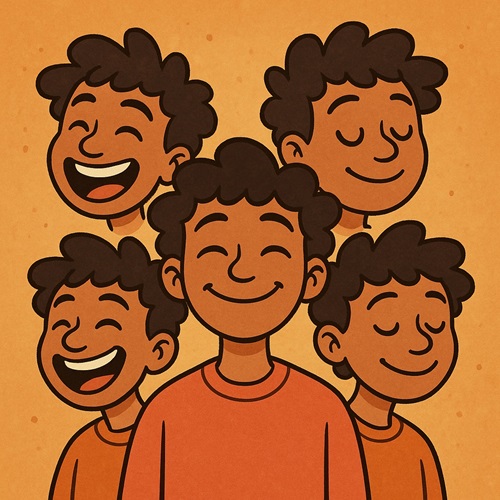
So, these are some of the traits that can tell us a lot about a person’s emotional health. These points are meant for self-analysis, as most of these qualities can only be discerned subjectively. However, it’s also essential to understand that feeling bad about not being able to fully control your mind is pointless. Although these characteristics can be nurtured through disciplining one’s thoughts, we are all ultimately human—and it’s natural to lose control over our emotions from time to time.
If you’re seeking ways to nurture your emotional well-being, I suggest trying out the Ho’oponopono technique. This simple practice uses four affirmations centered around forgiveness and love, and it has personally helped me elevate my state of mind during challenging times or when grappling with intense emotions.
Since I’ve mentioned how our subconscious beliefs deeply shape our behavior and emotions, I’d also like to share a program that helped me clear many known and unknown blocks. It’s called Christie Marie Sheldon’s Unlimited Abundance. Based on energy clearing, it supported me in breaking free from limiting beliefs so I could improve emotionally and approach life with a fresh perspective.
This post was originally published on March 31, 2016 and was last updated on July 22, 2025 to include new insights, updated resources, and links related to emotional health and subconscious mind healing.
I hope you enjoyed reading this post! Did I miss mentioning any other qualities you think are important? Feel free to drop your thoughts and share your perspective in the comments below — I’d genuinely love to hear from you. Your feedback really helps me keep improving the content here.
If you have any questions or need help with anything, don’t hesitate to reach out through the contact page — I’m always happy to connect and assist however I can.
And if you found this post helpful or inspiring, please consider sharing it on your social networks so others can benefit too. Thank you so much for being here!
Frequently Asked Questions about Emotional Health
What is emotional health in simple words?
Like physical health, a person has emotional health which pertains to a person’s well-being thought-wise and emotion-wise. Since all our actions are shaped by our thoughts and emotions, being emotionally healthy is of utmost importance.
How to know if someone is emotionally healthy?
When a person is least affected emotionally by external circumstances and acts responsively instead of reactively, they are emotionally healthy.
What are causes of bad emotional health?
It could be underlying deep conditioning based on genetics or the environment where one was raised, leading up to beliefs that do not serve well and cause emotional problems.
How to overcome emotional health problems related to limiting beliefs and mind conditioning?
Energy healing programs like Unlimited Abundance can help, or if you are more inclined to hypnotherapy then Marisa Peer’s Uncompromised Life might be useful. However, if the problem is greater than what one can actively control, then one must seek professional help.
How can I improve my emotional health daily?
Simple habits like practicing mindfulness, using positive self-talk, journaling, meditating, and focusing on gratitude can gradually strengthen your emotional well-being. You can explore some gratitude exercises to help make this part of your daily routine.
Are emotionally healthy people always happy?
No. Emotionally healthy people also feel sadness, anger, or fear, but they don’t get stuck there. They process emotions mindfully and return to a balanced state more easily.
Why is “letting go” so important for emotional health?
Letting go helps you release what no longer serves you — old grudges, limiting beliefs, or past pain. It frees mental and emotional energy, making space for new, positive experiences.
Photographic Memory Training: 6 Exercises to Improve Recall
Have you ever wished you could glance at a page and remember every detail later?

As a kid, I loved watching characters like Vicky from Small Wonder read books at lightning speed, as if their eyes worked like cameras and their brains could store everything instantly. It made me wonder whether photographic memory was something a person could actually develop.
Years later, I became curious enough to look beyond television and explore what science and memory experts had to say.
While the idea of a perfect photographic memory remains controversial, there’s good evidence that many memory skills, especially observation, attention, and visual recall, can be strengthened with consistent practice.
That changed the way I looked at memory. Instead of trying to remember everything perfectly, I started paying more attention to simple techniques that helped me notice more and recall more of what I saw.
In this article, I’ll share six photographic memory training exercises that can help improve your observation, visual recall, and overall memory. They won’t magically give you a photographic memory overnight, but they can help you build the habits that make remembering things easier.
Is Photographic Memory Real?
Some historical figures like Nikola Tesla and Leonardo da Vinci were believed to have photographic memory, although there is no definitive scientific evidence to confirm these claims. Modern science also hasn’t fully validated photographic memory as a measurable cognitive ability.
More recent examples often mentioned in discussions about exceptional memory include Kim Peek, whose remarkable recall inspired the film Rain Man, and Stephen Wiltshire, who is known for drawing highly detailed cityscapes from memory after seeing them only once. Their abilities were extraordinary, but they also represent exceptionally rare cases rather than something most people can realistically develop through training.
That said, don’t let skepticism stop you. Even if true photographic memory is rare, anyone can improve memory with the right training.
Think of it this way: your brain may already store far more detail than you consciously notice in the moment. Training helps you access and organize that stored information more reliably, which is what most people are really looking for when they talk about “photographic memory.”
I find this closely related to how we move information from the subconscious mind into conscious awareness. Your subconscious can hold immense detail, while your conscious mind works best when it is focused and selective. Memory training helps bridge that gap.
Quick note: Although the terms are often used interchangeably, eidetic memory and photographic memory are not exactly the same. For simplicity, I’ll occasionally use both terms throughout this article because that’s what most readers are familiar with.
6 Practical Exercises to Train Photographic Memory
1. Visualize Familiar Places

Choose a specific place for this exercise, such as your room, office, gym, or grocery store, and try to recall every minute detail of that location. However, avoid putting too much pressure on yourself.
To help with this process, you can use a notepad to jot down everything you remember. If you’re more visually inclined, you might even prefer sketching or painting the scene to capture the details.
Once you’ve visualized the place as thoroughly as you can, go there and observe it closely. Then return and repeat the visualization process, this time adding any new details you noticed.
With consistent practice, you’ll notice a remarkable improvement in your mind’s ability to remember places vividly. Repeat this regularly to train photographic memory and sharpen your visual recall.
Over time, this exercise can improve your observation skills and make it easier to visualize and recall places in greater detail.
2. Practice Being Fully Present for Better Visual Recall
When you are fully present, your mind becomes less cluttered and more focused on what you are actually seeing. This makes it easier to register details in real time instead of trying to reconstruct them later.
Bringing your attention to the present moment helps you consciously notice what is happening around you, which makes it much easier to recall details later. This practice is known as mindfulness meditation, and the techniques involved in mindfulness meditation are known to strengthen sensory perception and cognitive functions in measurable ways by training the mind to stay fully engaged in the task at hand.
In memory training, mindfulness is not just about feeling calm. It helps you notice more of what you see, making it easier to remember those details later.
3. Relive Memories with Friends
Sharing a memory with someone else gives you a valuable opportunity to actively engage in recalling past events as vividly as possible.
I personally love doing this, but the key is to treat it like a playful activity. I try to recall events in rich detail and then surprise others with the astonishing specifics I remember. It’s a fun way to exercise my memory, and I’ve noticed it also helps bring old memories back into my conscious awareness.
If you stay a bit more mindful while discussing a past event, you’ll notice your mind beginning to flash old images. Try to pay close attention to these mental visuals. They can help you recall experiences more clearly over time.
4. Use the Memory Peg Technique

Turn boring memory tasks into something fun! The memory peg technique is a clever trick that turns memorization into an enjoyable task for your brain.
This method taps into your creativity by associating the item you want to remember with an interesting or vivid image.
For example, imagine you need to buy several items but don’t want to make a list. You can use this technique by creating memorable mental pictures for each item. Say one of the items is a “pen.” You might imagine a rocket-shaped pen being operated by scientists, ready to launch into space! Trust me, when you link things this way, it becomes much harder to forget them.
This technique not only helps you remember things better but also exercises your imagination and strengthens your ability to visualize. Creative visualization is a powerful practice for improving memory. I also find it to be a useful way of engaging the subconscious mind. If you’d like to explore this idea further, you can read these 7 habits that help you access your subconscious mind.
5. The Military Flash Technique (Snapshot Memory Training)
The Military Flash Technique is often described as a memory training exercise for developing quick and accurate visual recall, almost like taking a mental photograph. While its exact origins are difficult to verify, many people use it as a way to practice concentration and visual observation.
This technique is especially useful for anyone looking to improve visual memory, visual learning, and overall mental sharpness.
How to Practice the Military Flash Technique:
- Set up your environment:
- Choose a dark room where you have easy access to a light switch.
- Hold a piece of paper in front of you with something written or drawn on it. This could be a word, number, short paragraph, or even an image.
- Perform the exercise:
- Turn the light on briefly to view the paper, then immediately switch it off.
- When the room goes dark, focus on the mental image that briefly flashes in your mind.
- Try to observe as much detail as possible in that fleeting moment, including letters, shapes, positions, or any distinct features.
- Refine your recall:
- After a few rounds, try to mentally reconstruct the image or text without turning the light back on.
- Challenge yourself to remember not only the content but also the structure and spacing.
- Repeat and train regularly:
- Repeat this process with different materials and increase the complexity over time.
- With consistent practice, you may find it easier to capture visual details and recall them more accurately.
This technique exercises both your visual memory and concentration. With regular practice, it can become a useful exercise for improving observation and visual recall.
6. Relax Your Mind with Meditation
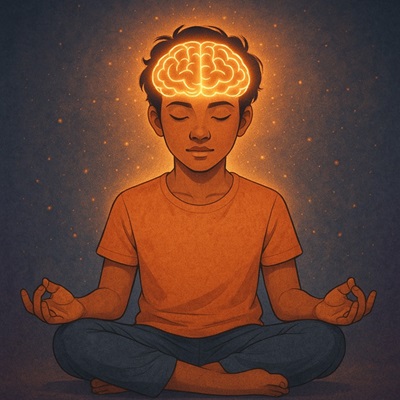
I personally find that memory becomes much easier to access when my mind is relaxed instead of constantly distracted. One way I like to think about this is that recalling information is the process of bringing stored memories into conscious awareness.
To improve our ability to recall, it helps to relax the conscious mind. When the mind is calm and focused, it’s often much easier to access and retrieve information you’ve already learned.
One of the most effective ways I’ve found to achieve this state is through meditation. Besides helping me relax, it also improves my awareness and mental clarity. If you’re new to the practice, here’s a helpful guide on what meditation is and how to do it in simple terms.
In addition to meditation, you might also benefit from practicing mindfulness exercises. These techniques help you stay present and focused, creating the right mental space for better observation and recall. For a great starting point, check out these simple mindfulness exercises for beginners.
Getting the Best Results from These Exercises
One thing you need to understand is that abilities and skills like these are developed over time, not overnight, so don’t get too obsessed with them. Learn them the same way you would learn to play an instrument as a hobby, not like trying to master the piano for a party next month. It’s simply not practical.
This also means you shouldn’t overload your mind by trying to practise all six exercises every day in the hope of becoming a superhuman overnight. Set realistic expectations and focus on steady progress instead.
Always remember that baby steps matter. Practise these exercises gradually and make them a part of your daily routine. Over time, they will naturally become habits, allowing you to make the best use of them.
If you force yourself to practise every exercise every day right from the beginning, you’re far more likely to lose motivation because it will start to feel tiring and tedious. After all, Rome wasn’t built in a day.
The most important takeaway here is to work on your observation skills first. If you learn to observe more carefully, better recall will naturally follow.
Finally, I want to emphasize this once again: don’t aim to become someone like Kim Peek overnight. Memory training is a natural ability that is developed through patience and consistent practice, not a superpower that can be acquired in a few weeks.
Final Thoughts
Whether you believe in true photographic memory or not, one thing’s for sure: your brain is capable of incredible things.
With the exercises above and a little consistent practice, you’ll improve your observation skills, sharpen your focus, and strengthen your ability to recall visual information more effectively.
If you’re looking for a more structured memory training program, you can also read my review of Zox Pro to see whether it’s the right fit for you.
I hope you enjoyed reading this post! I’d love to hear your thoughts, so feel free to share them in the comments below. If you have anything to add, your input is always welcome.
You can also reach out to me directly through the contact page. I’m always happy to help with any questions or concerns you may have.
And if you found this post helpful, please consider sharing it with your friends or on social media. It really means a lot and helps more people discover these techniques.
How to Explain Law of Attraction to Kids and Shape Their Beliefs Early
What could be a greater gift from a parent to a child than teaching them that they are not helpless observers of life, but conscious participants in shaping it?
If you’re wondering how to explain the law of attraction to kids in a way that feels practical rather than abstract, the key lies in simplicity and emotional clarity.
Teaching the Law of Attraction to kids can be a powerful decision when approached with balance and understanding. Many of the practices adults struggle with—such as creative visualization, positive focus, and belief shaping—come naturally to children. Their minds absorb ideas quickly, especially when those ideas are introduced by someone they trust.
Children learn best through play, imagination, and emotional engagement. This is precisely why principles related to the Law of Attraction can feel more natural to them than to adults. They are less burdened by doubt, overthinking, and resistance. In many ways, they already live in a state of openness.
Early childhood plays a significant role in shaping a person’s future. Research in developmental psychology consistently shows that early belief formation influences long-term behavior and self-perception (see research summaries on child development from the American Psychological Association).
The beliefs, assumptions, and emotional patterns formed during these formative years often influence adult behavior and self-image. When parents consciously guide children toward empowering beliefs, they are not imposing fantasy — they are helping shape a resilient and optimistic inner framework that can support them for life. Continue reading
Are Binaural Beats Safe? Risks, Side Effects, and My Experience
Many people use binaural beats for meditation, focus, or lucid dreaming — but few talk openly about the risks.
Before you press play, you deserve a clear answer to one simple question: are binaural beats actually safe?
In this post, I’ll explain the most commonly reported dangers of brainwave entrainment, how these audios can affect your nervous system, and what can go wrong when they’re used too much or too intensely.
I first used binaural beats years ago for lucid dreaming. At the start, the results felt powerful and positive. But after repeated use, I began experiencing sleepless nights, mental overstimulation, and difficulty relaxing naturally — which made me stop and reconsider their safety.
If you’ve ever felt anxious, wired, or unable to sleep after listening to binaural beats, this article will help you understand why that happens — and what to watch out for.
Some people report great success with brainwave entrainment tracks, and I don’t intend to prove them wrong. What I’m sharing here is my personal opinion formed from my own experiences.
My views about these audio tracks aren’t very positive because they caused me trouble long ago. Even though many programs now offer higher-quality versions of these audios, I’m still a little hesitant to use them.
I don’t have an extensive list of risks to share, since they generally aren’t very harmful for someone in good health. Nonetheless, I want to emphasize in this post the importance of being extra careful, particularly when selecting the quality of audio tracks that are meant to alter the brainwave frequency of your mind.
Continue reading