Photographic Memory or Eidetic Memory
In simple words, photographic memory could be described as an ability to recall things in form of images with all details.
Actually we all think in images, on a conscious level we might not be able to discern that always but with a little awareness you can know that whenever we are thinking or recalling we are doing it in form of images.
If I say “fire” you will immediately see an image of fire in your mind that’s how our thinking mechanism works.
So, when we all try to recall things from past, sometimes we get vivid pictures in mind and sometimes we see distorted images and that is what differentiates a person having a strong memory with the one who has weak memory. The reason behind this actually depends on many factors like a person’s attentiveness, their practice in recalling, confidence etc. which is all related to only one thing and that is their conscious mind’s rapport with their subconscious mind. Continue reading
Train Your Photographic Memory-Retain More Information
This post will provide you a few tips that will help you to train your photographic memory so that you can remember things better than before.
First of all, let me answer a very common question – Is there really something like photographic memory?
Yes, there is and we can make use of it in various ways to improve ourselves in many areas of our lives.
Photographic memory is actually an ability to store and recall things in visual forms.
In fact, we actually store information in form of images only but, since the process is very fast we are not able to consciously realize it.
For example – If we hear numbers “09675” our mind stores that as an image, it could be the whole picture “09675” or every number individual “0”,”9” etc. etc. in sequence.
So, once we understand the importance of remembering in images we can then practice and develop photographic memory. Continue reading
6 Common Characteristics of Highly Intuitive People
Many people use their intuition in different ways but, there are few characteristics of highly intuitive people which separates them from the rest. We all use our intuition in various day to day decisions, some of us do it knowingly whereas some believe that their past experiences have trained them to make the right decisions based on something which is higher than logic.
Usually, people believe that the psychic abilities are meant only for some special people and no one else could acquire it, well that’s a lie anyone can develop their intuition with practice. However, there are people who are naturally good in using their sixth sense.
Since such people are little different from normal people they deliberately hide their true nature by pretending to be normal so that they don’t appear weird in front of others, this mostly happens in their childhood and gradually they forget their true nature completely.
The intuitive skill is never lost so, even when they don’t know about their gift they have it and these are few characteristics which can tell if someone belongs to that category. Continue reading
Photographic Memory Training: 6 Exercises to Improve Recall
Have you ever wished you could glance at a page and remember every detail later?

As a kid, I loved watching characters like Vicky from Small Wonder read books at lightning speed, as if their eyes worked like cameras and their brains could store everything instantly. It made me wonder whether photographic memory was something a person could actually develop.
Years later, I became curious enough to look beyond television and explore what science and memory experts had to say.
While the idea of a perfect photographic memory remains controversial, there’s good evidence that many memory skills, especially observation, attention, and visual recall, can be strengthened with consistent practice.
That changed the way I looked at memory. Instead of trying to remember everything perfectly, I started paying more attention to simple techniques that helped me notice more and recall more of what I saw.
In this article, I’ll share six photographic memory training exercises that can help improve your observation, visual recall, and overall memory. They won’t magically give you a photographic memory overnight, but they can help you build the habits that make remembering things easier.
Is Photographic Memory Real?
Some historical figures like Nikola Tesla and Leonardo da Vinci were believed to have photographic memory, although there is no definitive scientific evidence to confirm these claims. Modern science also hasn’t fully validated photographic memory as a measurable cognitive ability.
More recent examples often mentioned in discussions about exceptional memory include Kim Peek, whose remarkable recall inspired the film Rain Man, and Stephen Wiltshire, who is known for drawing highly detailed cityscapes from memory after seeing them only once. Their abilities were extraordinary, but they also represent exceptionally rare cases rather than something most people can realistically develop through training.
That said, don’t let skepticism stop you. Even if true photographic memory is rare, anyone can improve memory with the right training.
Think of it this way: your brain may already store far more detail than you consciously notice in the moment. Training helps you access and organize that stored information more reliably, which is what most people are really looking for when they talk about “photographic memory.”
I find this closely related to how we move information from the subconscious mind into conscious awareness. Your subconscious can hold immense detail, while your conscious mind works best when it is focused and selective. Memory training helps bridge that gap.
Quick note: Although the terms are often used interchangeably, eidetic memory and photographic memory are not exactly the same. For simplicity, I’ll occasionally use both terms throughout this article because that’s what most readers are familiar with.
6 Practical Exercises to Train Photographic Memory
1. Visualize Familiar Places

Choose a specific place for this exercise, such as your room, office, gym, or grocery store, and try to recall every minute detail of that location. However, avoid putting too much pressure on yourself.
To help with this process, you can use a notepad to jot down everything you remember. If you’re more visually inclined, you might even prefer sketching or painting the scene to capture the details.
Once you’ve visualized the place as thoroughly as you can, go there and observe it closely. Then return and repeat the visualization process, this time adding any new details you noticed.
With consistent practice, you’ll notice a remarkable improvement in your mind’s ability to remember places vividly. Repeat this regularly to train photographic memory and sharpen your visual recall.
Over time, this exercise can improve your observation skills and make it easier to visualize and recall places in greater detail.
2. Practice Being Fully Present for Better Visual Recall
When you are fully present, your mind becomes less cluttered and more focused on what you are actually seeing. This makes it easier to register details in real time instead of trying to reconstruct them later.
Bringing your attention to the present moment helps you consciously notice what is happening around you, which makes it much easier to recall details later. This practice is known as mindfulness meditation, and the techniques involved in mindfulness meditation are known to strengthen sensory perception and cognitive functions in measurable ways by training the mind to stay fully engaged in the task at hand.
In memory training, mindfulness is not just about feeling calm. It helps you notice more of what you see, making it easier to remember those details later.
3. Relive Memories with Friends
Sharing a memory with someone else gives you a valuable opportunity to actively engage in recalling past events as vividly as possible.
I personally love doing this, but the key is to treat it like a playful activity. I try to recall events in rich detail and then surprise others with the astonishing specifics I remember. It’s a fun way to exercise my memory, and I’ve noticed it also helps bring old memories back into my conscious awareness.
If you stay a bit more mindful while discussing a past event, you’ll notice your mind beginning to flash old images. Try to pay close attention to these mental visuals. They can help you recall experiences more clearly over time.
4. Use the Memory Peg Technique

Turn boring memory tasks into something fun! The memory peg technique is a clever trick that turns memorization into an enjoyable task for your brain.
This method taps into your creativity by associating the item you want to remember with an interesting or vivid image.
For example, imagine you need to buy several items but don’t want to make a list. You can use this technique by creating memorable mental pictures for each item. Say one of the items is a “pen.” You might imagine a rocket-shaped pen being operated by scientists, ready to launch into space! Trust me, when you link things this way, it becomes much harder to forget them.
This technique not only helps you remember things better but also exercises your imagination and strengthens your ability to visualize. Creative visualization is a powerful practice for improving memory. I also find it to be a useful way of engaging the subconscious mind. If you’d like to explore this idea further, you can read these 7 habits that help you access your subconscious mind.
5. The Military Flash Technique (Snapshot Memory Training)
The Military Flash Technique is often described as a memory training exercise for developing quick and accurate visual recall, almost like taking a mental photograph. While its exact origins are difficult to verify, many people use it as a way to practice concentration and visual observation.
This technique is especially useful for anyone looking to improve visual memory, visual learning, and overall mental sharpness.
How to Practice the Military Flash Technique: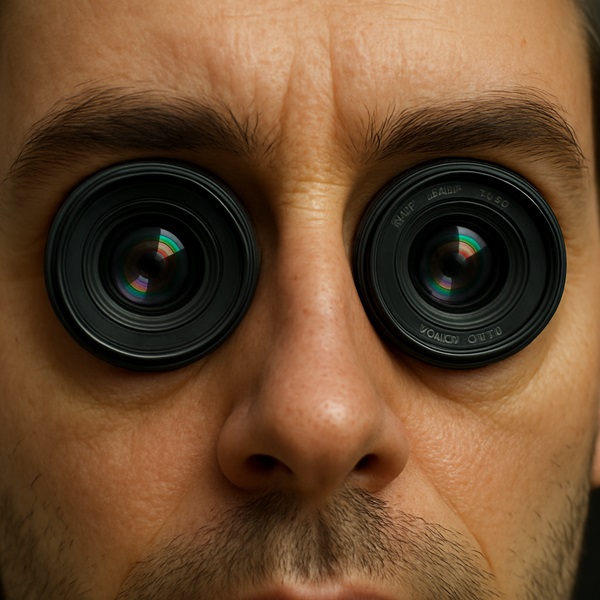
- Set up your environment:
- Choose a dark room where you have easy access to a light switch.
- Hold a piece of paper in front of you with something written or drawn on it. This could be a word, number, short paragraph, or even an image.
- Perform the exercise:
- Turn the light on briefly to view the paper, then immediately switch it off.
- When the room goes dark, focus on the mental image that briefly flashes in your mind.
- Try to observe as much detail as possible in that fleeting moment, including letters, shapes, positions, or any distinct features.
- Refine your recall:
- After a few rounds, try to mentally reconstruct the image or text without turning the light back on.
- Challenge yourself to remember not only the content but also the structure and spacing.
- Repeat and train regularly:
- Repeat this process with different materials and increase the complexity over time.
- With consistent practice, you may find it easier to capture visual details and recall them more accurately.
This technique exercises both your visual memory and concentration. With regular practice, it can become a useful exercise for improving observation and visual recall.
6. Relax Your Mind with Meditation

I personally find that memory becomes much easier to access when my mind is relaxed instead of constantly distracted. One way I like to think about this is that recalling information is the process of bringing stored memories into conscious awareness.
To improve our ability to recall, it helps to relax the conscious mind. When the mind is calm and focused, it’s often much easier to access and retrieve information you’ve already learned.
One of the most effective ways I’ve found to achieve this state is through meditation. Besides helping me relax, it also improves my awareness and mental clarity. If you’re new to the practice, here’s a helpful guide on what meditation is and how to do it in simple terms.
In addition to meditation, you might also benefit from practicing mindfulness exercises. These techniques help you stay present and focused, creating the right mental space for better observation and recall. For a great starting point, check out these simple mindfulness exercises for beginners.
Getting the Best Results from These Exercises
One thing you need to understand is that abilities and skills like these are developed over time, not overnight, so don’t get too obsessed with them. Learn them the same way you would learn to play an instrument as a hobby, not like trying to master the piano for a party next month. It’s simply not practical.
This also means you shouldn’t overload your mind by trying to practise all six exercises every day in the hope of becoming a superhuman overnight. Set realistic expectations and focus on steady progress instead.
Always remember that baby steps matter. Practise these exercises gradually and make them a part of your daily routine. Over time, they will naturally become habits, allowing you to make the best use of them.
If you force yourself to practise every exercise every day right from the beginning, you’re far more likely to lose motivation because it will start to feel tiring and tedious. After all, Rome wasn’t built in a day.
The most important takeaway here is to work on your observation skills first. If you learn to observe more carefully, better recall will naturally follow.
Finally, I want to emphasize this once again: don’t aim to become someone like Kim Peek overnight. Memory training is a natural ability that is developed through patience and consistent practice, not a superpower that can be acquired in a few weeks.
Final Thoughts
Whether you believe in true photographic memory or not, one thing’s for sure: your brain is capable of incredible things.
With the exercises above and a little consistent practice, you’ll improve your observation skills, sharpen your focus, and strengthen your ability to recall visual information more effectively.
If you’re looking for a more structured memory training program, you can also read my review of Zox Pro to see whether it’s the right fit for you.
I hope you enjoyed reading this post! I’d love to hear your thoughts, so feel free to share them in the comments below. If you have anything to add, your input is always welcome.
You can also reach out to me directly through the contact page. I’m always happy to help with any questions or concerns you may have.
And if you found this post helpful, please consider sharing it with your friends or on social media. It really means a lot and helps more people discover these techniques.
Photo Reading vs Speed Reading-Which One Would You Prefer?
In truth, there could be no comparison between speed reading and photo reading because both are totally different processes when it comes to utilizing them.
Speed reading is like our conventional reading method where you put your attention on the written material in order to comprehend the message represented by those words; this is all about our conscious mind’s involvement.
The only difference between speed reading and regular way of reading is that in speed reading you learn to move your eye faster through the sentences with practice.
On the other hand, photo reading is a subconscious process. Using a special way to look at the pages of the book (taught by photo reading courses like zox pro) you register the whole picture of the page in your subconscious mind.
The memory that is used for photo-reading is called photographic memory.
Conscious Mind Effort
Speed reading process requires very high conscious mind effort since you are trying to make sense of the sentences while you are moving your visual focus rapidly through them. The mentors of speed reading programs deliberately put pressure on the students so that they could improve their speed of moving their focus from sentence to sentence.
Photo reading requires no effort of conscious mind at all apart from the action of looking at the pages using a different kind of focus, in fact this process gets better depending on the person’s ability to relax his conscious mind.
Level of Comprehension
While using speed reading your level of comprehension remains unchanged as your regular reading method since, you are consciously reading the sentences. With speed your ability to comprehend the words may decrease a little but you can improve it with practice.
On the other hand in using photo reading, you won’t be able to comprehend even a single word on the conscious level while looking at the written material. Once you have captured the image of the page in your mind using photo focus you will have to go through various processes to bring the information into your conscious mind from your subconscious mind.
Speed
Photo reading knocks out speed reading when it comes to speed. As you are capturing the whole page at once while using the photo reading method it is said that you can read 25000 words in a minute.
In speed reading, your speed depends how fast you can move your focus from one sentence to the other while maintaining your ability to comprehend.
Practical Usage
Learning and implementing speed reading in practical life is as possible as the conventional way of reading once the individual has perfected the skill with practice.
Practical usage of photo reading however has been a controversial subject always because of its too good to be true claims.
This is a skill that could be perfected by building a strong rapport between a person’s conscious mind and his subconscious mind so; people who are committed in making full utilization of their higher potential by learning various methods are more successful than those who are oblivious to their subconscious power.
That’s why photo reading courses like Zox Pro receives mixed responses. I consider that a person’s progress with skills like photo reading depends on his own beliefs.
To know more about photo-reading you can read my post – Photo Reading – What Is It and How Does It Work?
I hope you enjoyed this post. I would love to hear from you so, please do write me in the box below. If you have something to add here then please feel free to enlighten us with your knowledge. (Your email id will be safe and hidden, you can even prefer your secondary email id for commenting)
You can also mail me with any of your life issues or queries at hari@zerotoinfinitude.com, I will be very happy to help you.
If this post was helpful to you then please spread the word by sharing it on your online social networks.
You May Also Like to Read:-
Train Your Photographic Memory-Retain More Information
Photographic Memory Training Exercises-Develop Eidetic Memory
7 Habits Which Enables You to Easily Tap into Your Subconscious Mind Power
Zox Pro Training Review- Memory Training Course or Scam?
Don’t Say “I Don’t Know How to Use Creative Visualization”- You Are Already Good at It!
Is Your Family’s Energy Blocking Your Abundance?-Reprogram Your Mind
Our perspective towards various aspects of our lives is formed due to the nature of energy of the atmosphere where our mind develops.
By the nature of energy I mean various emotional responses that arises as a direct result of the beliefs, concepts and ideas that were present in our family or society to which we were constantly exposed directly or indirectly when we were growing up.
Past Events Does Subconscious Mind Programming
In childhood our mind readily accepts any idea that is repeatedly introduced to us and sometimes we form various beliefs related to our emotional experiences.
Astoundingly, we still operate by these set of rules and our whole life is shaped by these deeply ingrained concepts.
By going through various personal development materials I was already aware of my few limiting beliefs and I was constantly working towards altering them using various methods. But, when I opted for Christie’s Unlimited Abundance program and tuned into the session named clearing family blocks, my whole life started to make complete sense and I truly realized how our mind gets programmed due to various past events, this is why I consider that particular unlimited abundance special session as the most important one in the whole package,.
In our life we often imitate our parent’s way of living or we play a rebel who unconsciously wants to prove their ways wrong.
Both the ways of living has its own advantages and disadvantages but, our true aim should be to rise above such unconscious motives and reprogram our mind with the beliefs that brings us joy.
Identifying Your Family’s Limiting Beliefs
In my unlimited abundance journey, I was lucky to have detected various events in my life that created many limiting beliefs in me which were blocking my progress.
Before implanting a new belief in our subconscious mind it is essential to identify the old ones because our efforts to install new ideas would be based on the nature of our old mind programming.
It is easy to find out our old conditioning, for that we will have to do a little self-analysis.
For example, let us suppose that you want to get out of debt:-
Sit down with a pen and paper. Ask yourself a few questions that will bring up your true beliefs about money.
Write how your family was doing in the area of wealth when you were growing up..
Write down the judgments you formed about money during your childhood..
Have you witnessed any financial dispute in your family or society?
Have you had any kind of judgments about wealthy people?
Did your parents used to fight over wealth issues?
Did you resent your parent’s way of making money because you were not getting much of his/her time?
Are you trying to unconsciously keep yourself less successful than your parents because you don’t want to become better than them?
Answering such questions with an honest self assessment will bring forth the subconscious beliefs you have that are blocking you from overcoming your current difficulties.
Remember we are trying to work with the deeper level of your mind here so; you should formulate your own questions that would make your mind to search through your past experiences and come up with proper answers.
Every person have their unique different reasons due to which they are creating their own obstacles in various areas of their lives but, there are few common energy blocks present in the energy field of most of the people.
Few examples of family beliefs that are usually found in the cases of people who find it hard to be financially successful are:-
-Money is the root of all evil..(that verse actually says that “love” of money is the root of all evil)
-Money doesn’t grow on trees (earning money is very difficult)
-Life is not a bed of roses (You have gotta struggle a lot in life!)
-Being wealthy is not spiritual…
Clearing the Limiting Family Beliefs
Whether let it be a belief which was imposed upon you by a family member or the one which you formed because of a specific event occurred in your family, you hold the power to replace it with a new better belief that will ensure your success in any area of your life.
Once you have identified your energy blocks then you can clear them using various methods like creative visualization, affirmations, meditations etc.
I have illustrated three such methods in the post “Allow Your Abundance”, read it to learn how to perform energy clearing on your own.
I hope you liked this post. I would love to hear your views about this so please do leave me a comment in the box below. (Your email id will be safe and hidden, you can even prefer your secondary email id for commenting)
You can also mail me at hari@zerotoinfinitude.com
If this post was helpful to you then please spread the word by sharing it on your online social networks.
You May Also Like to Read:-
Key to Attract More Wealth-Clear Limiting Beliefs about Money
Change Your Limiting Beliefs about Weight Loss-Using LOA to Lose Weight
Spiritual Healing of Broken Heart-Heal Yourself from the Emotional Pain
Law of Orderly Thinking – Effects of Random Thoughts
3 Common Creative Visualization Mistakes That You Must Avoid!
Anybody Can Be Intuitive- 6 Requirements to Develop ESP
Apart from the five senses, we are also born with a better ability to understand and interpret the world, and that can be termed as “intuition”. Only those who believe in it can make use of it.
As kids we all have used our intuition, every baby follows its inner voice to recognize people who love them.
Some of us do believe in ESP (Extra Sensory Perception) but, they are not able to make use of it as there are certain requirements to develop ESP and we will discuss them in detail here. Continue reading